
With the stock coming under pressure, the MF holding value could have dropped to Rs 50 billion, back-of-the-envelope calculations show.

First sequential decline in a decade as 8 of top 15 software firms report drop in manpower

Total revenue dropped to Rs 5,406 crore in the first quarter of the current financial year from Rs 5,508 crore in the same period a year ago

India's equity markets are on a roller-coaster ride, after delivering spectacular returns for two consecutive years - in 2020 and 2021. The benchmark National Stock Exchange's (NSE's) Nifty50 is down 1.5 per cent in the first nine months of the current calendar year 2022 (CY22) as foreign portfolio investors sold Indian stocks due to rising bond yields in the US and across global markets, including India. The sell-off in the Indian equity markets has, however, not been broad-based and largely limited to sectors facing earnings headwinds from rising interest rates, lower commodity and energy prices, and likely economic recession in advanced economies.

The economy is expected to throw up better numbers in the September quarter with GDP contraction of 9.9 per cent, as against 24 per cent in Q1 at the onset of the pandemic, says a report. The government will release the Q2 GDP numbers later this month. In the first contraction since 1980, the economy shrank a full 23.9 per cent in the first quarter of the fiscal after the whole nation was put under a strict lockdown.

China's GDP grew by 4.9 per cent in the third quarter, down from 7.9 per cent in the second, confirming the slowdown of the world's second-largest economy which was under pressure from the crisis-hit property sector, curbs on energy and tardy recovery from the Covid-19 pandemic.
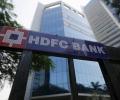
The country's most valuable lender HDFC Bank can perhaps no longer claim to be a favourite of foreign portfolio investors (FPIs). Two data indicators, both somewhat interconnected, point to this - the diminishing premium of HDFC Bank's American depositary receipts (ADRs) compared to local shares, and the ample investment opportunities available to FPIs in the domestic market. The ADR premium has shrunk to below 5 per cent, down from over 30 per cent in March 2021, and even lower than recent levels.

Company's revenue growth is likely to be volatile going ahead

Tata Motors on Monday launched the country's first CNG truck in the medium and heavy commercial (M&HCV) vehicle segment in the 28- and 19-tonne nodes. Most truck makers, including Tata Motors, currently offer CNG only in the small and light commercial vehicle segments. The company also launched a fleet of seven trucks in the intermediary and light commercial vehicle (I&LCV) segment, meant for varied applications.

The coming years could be exciting for Bandhan Bank, IDBI Bank, IDFC First Bank, Federal Bank, and CSB Bank.

Its production declined for the third consecutive year in financial year 2020-21 (FY21) to an 11-year low, while sales volume contracted for the second year to the lowest since FY15. The company manufactured around 1.08 million vehicles last fiscal, a decline from 1.17 million the previous year, and a steeper fall from its all-time high tally of 1.62 million reported in FY18.

Sensex gained nearly 0.4% or 96 points at 26087 level while Nifty ended up by 42 points or 0.5% at 7,791.40 level.

Wockhardt hit a 52-week abyss at Rs 306.05 in early trades after the company reported a steep 64% fall in net profit.

Technology start-ups that got listed in the last few quarters reported a hit to their December-quarter (Q3FY22) profitability due to higher marketing and employee costs. While fintech firms Paytm and PB Fintech saw their losses widen by 45 per cent year-on-year (YoY) to Rs 778 crore and 55 per cent to Rs 295 crore, respectively, food delivery company Zomato remained in the red despite narrowing its net loss by 81 per cent to Rs 66 crore. Meanwhile, online fashion and beauty products seller Nykaa saw its net profit drop 59 per cent to Rs 28 crore in Q3FY22.

Sensex, Nifty slightly upbeat, midcaps to rule markets this week.

Combined profit before tax of 81 firms down 37.5% y-o-y, worst show in at least 3 years.

'The mismatch between valuations and fundamentals is startling,' warns Devangshu Datta

Sensex gained over 100 points and ended at 26147.33 while the Nifty ended 27 points higher at 7,795.75.

The bookings of tickets under the four-day "festive sale" offer have begun from Monday for the travel period from September 18, 2018 to March 30, 2019, IndiGo said.

The broader NSE Nifty fell 78.75 points, or 0.70 per cent, to close at 11,234.55.

'Money that came into mutual funds near the previous peaks -- the second half of 2017 and 2018 -- has in most cases experienced unflattering returns.' 'A large proportion of redemptions could be such inflows exiting when the market recovered sharply from July 2020 onwards.'

Currency played an important role in Q2, with US dollar, Japanese yen and euro appreciating vis-a-vis the Indian rupee, while the Brazilian real, South African rand and Russian ruble depreciating against rupee.

Reliance announced a rights issue of Rs 53,125 crore, which it said was the biggest in India.

Together, the top 10 business groups reported a pre-tax loss of Rs 19,342 crore during the January-March 2020 quarter, as against a profit before tax of around Rs 48,500 crore in the year-ago period and Rs 39,600 crore during the December quarter. While Vedanta was the worst hit. others included Aditya Birla, Bharti, Adani, Mahindra, and Tata.
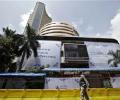
Sensex gained 38.18 points or 0.15% at 25,918.95 and Nifty ended higher by 12.50 points or 0.16% at 7,739.55.

Asia has opened largely in the green ahead of a raft of Chinese data due during the day.

The group firms reported combined losses of Rs 6,134 crore in FY19 against a net profit of Rs 5,414 crore a year ago. Excluding Vodafone Idea, the group reported a net profit of Rs 8,470 crore, down from a profit of Rs 9,582 crore a year ago.

Rising prices of international coal - both coking and thermal - used in the making of ferrous and non-ferrous metals, respectively, are expected to have an impact on margins of metals companies in July-September quarter (Q2) as steel companies may see margins getting eroded, while the base firms could stand to benefit, said brokerages.

Sensex dull at close, Infosys rules, ITC drags.

iPhone sales in India were up by 56 per cent during the period.

Banking and capital goods stocks were out of favour, while oil and auto stocks saw buying interest.

Combined sales at top four manufacturers - Tata Motors, Ashok Leyland, Volvo Eicher Commercial Vehicles, and Mahindra and Mahindra - dropped 20 per cent to 20,324 units in November

The rupee fell to a two-year low of 64.84 against the US dollar.

The Board rued that its efforts to resolve the concerns of the founders - who together own about 12.75 per cent stake in Infosys - over the course of a year through a dialogue have not been successful.

The bigger worry is that the miss for FY19 is likely to be significant even after assuming macro factors such as crude oil prices, rupee, input costs, and interest rates, do not worsen from the current levels, reports Vishal Chhabria.

Infosys forecast a 10.8-12.3 per cent sales growth in the US dollar terms for 2016-17.

On the sectoral front, rate-sensitive sectors such as Bankex and Auto gained by 1% and 0.7% respectively while BSE Consumer Durables gained 1.4%.

Gold has pushed lower as a result of Chinese selling.
With rate cut expectations running high ahead of RBI meet this week, risk appetite improved especially in rate sensitive stocks

Asian markets were trading mixed with shares in China witnessing profit taking after sharp gains in the previous session.
